
The Right Employer Interview Questions To Ask
The exploration stage of the interview is all about the questions and at this stage you are aiming to help the candidate communicate freely and in so doing obtain the information you require. The choice of question, the style, the order and the phrasing will all contribute to how well you achieve these objectives.
A good question is one which helps the candidate to talk freely and openly while a poor question can have the opposite affect.
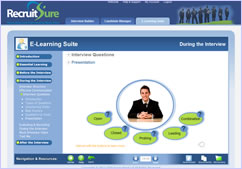
Open questions are the most common type with questions beginning with How, What, When, Why, Where and Tell me. Closed and probing questions are useful too and of course many employers are now using Competency Based and Behavioural Questions for a more balanced and fair interview process.
How to Ensure Interview Questions Asked Are Legal
Employers are urged to make sure that they, and other managers or staff members who regularly take part in interviews, receive relevant training to make sure they don’t accidentally ask illegal questions during interviews. But working on the processes and procedures surrounding job appointments can go a long way to preventing avoid these situations from cropping up.
First and foremost it’s essential to ensure that every single job applicant goes through exactly the same interview and selection process, and collect documentary evidence to demonstrate that this that has happened. It will then become harder for anyone to prove that they were treated differently at their job interview because of discrimination.
Secondly, make sure that your interviewers are made aware that with some of these topics it’s simplest to assume that any question would be illegal in a job interview, and that they are best avoided. This is certainly true of any questions regarding race, sexual orientation, gender, and political or religious leanings.
Thirdly, have a standard set of questions drawn up for the post, as part of your standardised procedure, and make sure that they are about the job, not the person. Although obviously follow on questions will be different for different candidates, this will help prevent the asking of illegal interview questions.
Examples Of Illegal Job Interview Questions
For example for a manual position, you can describe the lifting and carrying duties required for the post and ask if candidates will be able to do them without problems. But you can only do this if you ask it of every candidate, and you can’t ask one candidate “Will your back problem stop you from lifting heavy boxes?”
Similarly you cannot ask people what their native language is or where they were born. It is not illegal however to question whether or not they have the correct permissions to work in the UK.
Again this has to be asked of everyone who attends the job interviews and not just select candidates as that would be discrimination.
Can you spot which of these Interview Questions could be seen as illegal?
– Do you plan on having children? (Gender discrimination)
– Are you married? (Sexual Orientation)
– Where do your parents come from? (Race Discrimination)
– How long have you lived in this country? (Race discrimination)
– Do you have any health issues? (Disability Discrimination)
– Can you work on Sundays? (Religious Discrimination)
– How many years has it been since you graduated from College? (Age discrimination)
– You may have to travel a lot in this role. Will that be an issue for your family? (Sexual Orientation)
As you can see they could ALL be regarded as discriminatory and as a result illegal. The risk is that you as an employer could then be sued by an interview candidate if they believe they have been treated unfairly and against the law.
Sample Employer Interview Questions to Ask
Here is a small sample of good interviewer questions. These have all been taken from the RecruitSure online system for employers to give you an idea of how to construct questions that are both legal and also effective at gathering the information you need.
- Tell me where do you think you could improve on your career, what would you change given the chance?
- Tell me about a time when you had to overcome significant obstacles in order to achieve an objective.
- Describe an achievement which resulted in an improvement to the way you did your job.
- From your knowledge of our organisation, what are the top three goals you would set for the company and the department?
- Give me an example which shows your ability to use data to identify the inter-relationship between situations not obviously related.
- Talk me through a decision you made recently which you regarded as ‘difficult’. Why was it difficult, what steps did you take and what was the consequence of your decision?
Access 2,000 Interview Questions Online
Want to be confident the questions you are asking are legal and appropriate? The whole area of interviewing can be a minefield and although common sense and good management practice can go a long way to preventing illegal questions at an interview, it’s strongly advised that employers take steps to ensure that the risk of this happening is avoided.
The RecruitSure online system contains 2,000 Interview Questions to ask and all have been created by recruitment experts. Within minutes you can create a professional interview script for any job; simply input the job type and level and the system will select the right questions to ask avoiding the risk of asking any that could be deemed illegal.
|
|
|
Barry Poole, Mortgage Broker
Learn More About Recruitsure and How it Makes Interviewing Easy »